Showing posts with label 1st Duke of Somerset. Show all posts

Monday, March 30, 2015

Profile - William de la Pole, Duke of Suffolk, 1396-1450


William de la Pole, Duke of Suffolk, was a favourite in Henry VI's court whose self-invested policies would lead to public hatred and his death.

COMMANDER
He was born on 16 October 1396 at Cotton, Suffolk, son to Michael de la Pole, 2nd Earl of Suffolk, and Katherine de Stafford. Suffolk had served loyally in France for 17 years where he was seriously wounded in the Siege of Harfleur in 1415, commanded English forces at the Siege of Orléans in 1429 and surrendered shortly afterwards at Jargeau. Suffolk remained a prisoner of war until he was ransomed in 1431.
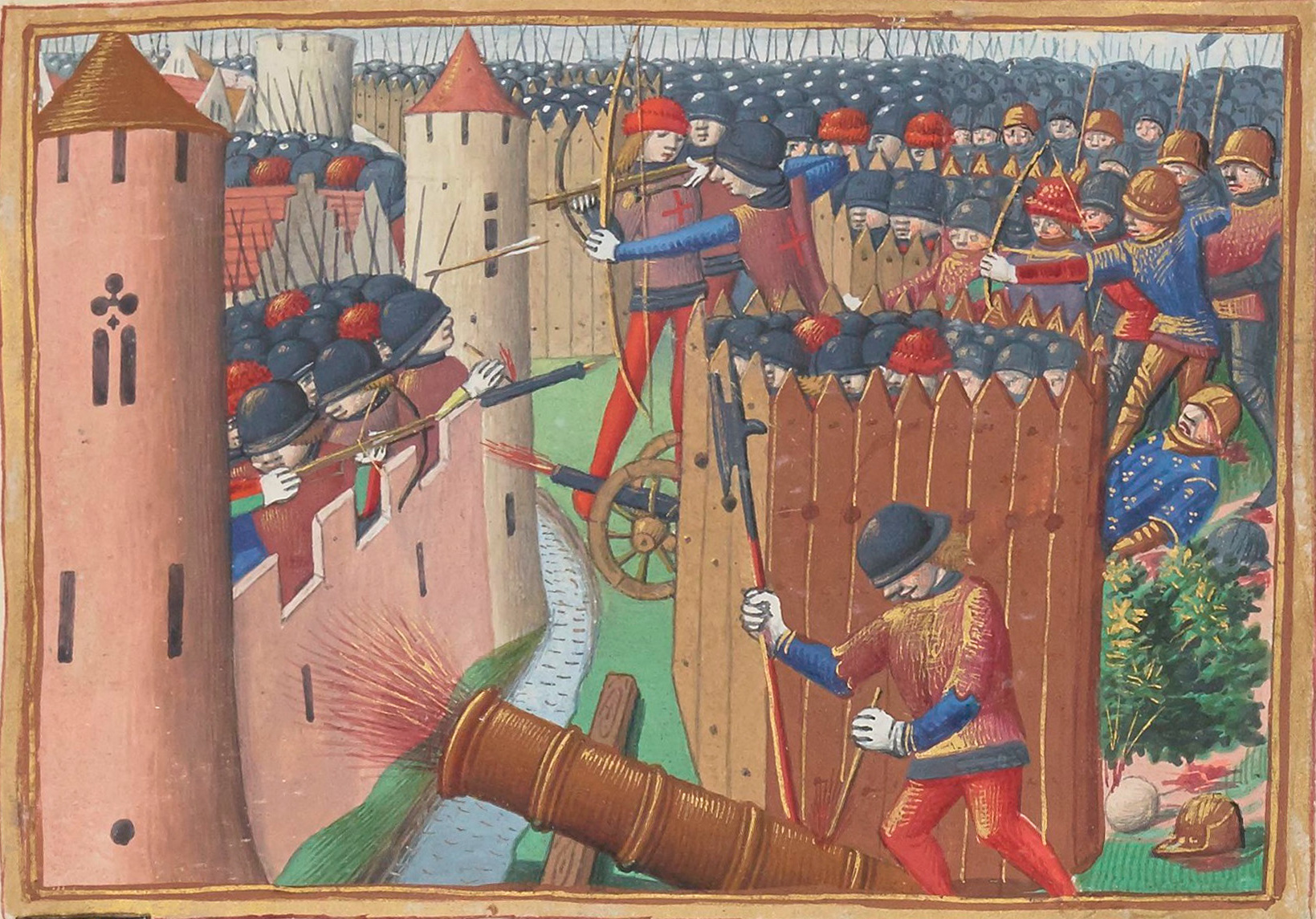
Suffolk unsuccessfully commanded the English in the Siege of Orleans
Suffolk was rewarded for his service when he returned to England by being appointed Constable of Wallingford in 1434. He had been awarded command of Orléans after the death on 3 November 1428 of his friend, Thomas Montacute, 4th Earl of Salisbury. After returning from France, Suffolk married Salisbury's widow, Alice Chaucer, grand-daughter to poet, Geoffrey Chaucer. Suffolk was tired of war with the French and aligned himself with Cardinal Henry Beaufort who shared the same anti-war sentiment.

Beaufort clashed with Henry VI's uncle Humphrey, Duke of Gloucester, during the king's minority. Gloucester wanted to continue war with France following the disastrous Treaty of Arras in 1435 when England were betrayed by their traditional ally, Burgundy. Worse was to come for the young king when his mother, Catherine of Valois, died on 3 January 1437 and the king's half brothers, Edmund and Jasper Tudor, were placed in the care of Suffolk's sister, abbess of Barking Abbey, Katherine de la Pole.

Henry VI came of age in 1437 but still deferred to his Council and rewarded Beaufort's faction with lands and titles. Richard, Duke of York's lieutenancy of France was undermined by John Beaufort, 1st Duke of Somerset, naming himself Lieutenant of Aquitaine and Captain-General of Guienne. The king gave Somerset much needed troops and resources away from York and this would be the first of many disregards the king had for York, setting in motion the conflicts that lay ahead. 

MATCH MAKER
Somerset's daughter, Margaret Beaufort, was born on 31 May 1443 and Somerset negotiated with the king that Margaret's wardship and marriage should only be decided by her mother. Somerset soon fell out of favour with the king and subsequently died on 27 May 1444 leaving Margaret as heiress. Henry VI broke the agreement four days later by giving Margaret's wardship to Suffolk and the heiress remained with her mother.

Suffolk's only legitimate heir, John de la Pole, was born on 27 September 1442, and Suffolk betrothed him to Margaret Beaufort. The king himself had yet to wed and Cardinal Beaufort and Suffolk looked to a French alliance to bring peace between the two countries.

The king was attracted to the commissioned portraits of Margaret of Anjou, niece of the French King Charles VII, and Suffolk was begrudgingly sent to France to actively participate in discussions he knew would be unpopular with the English public. Margaret's father, Rene of Anjou, was penniless and made it plain to Suffolk that there wouldn't be a customary dowry. Rene went further by demanding the English-owned lands of Maine and Anjou to be returned to him and this was backed by Charles VII.
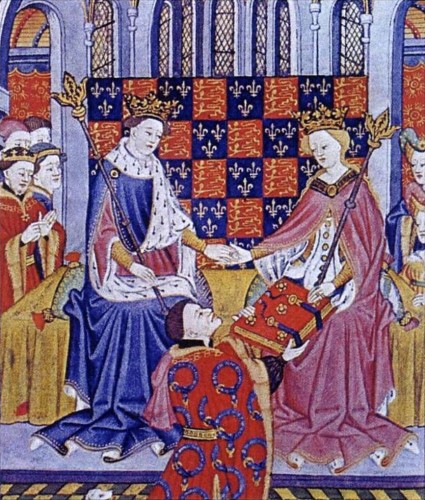
Suffolk brokered the marriage of Henry VI and Margaret of Anjou 
Suffolk knew these demands would infuriate the English court and public alike but Henry VI readily agreed when he discovered the Burgundian prince, Charles Count Nevers, was also seeking Margaret's hand in marriage. Suffolk included the caveat of England retaining their French conquests of Aquitaine and Normandy but he was unable to include a two-year truce in the Treaty of Tours. 

Suffolk met the future queen at Tours and was impressed with her beauty and poise. He prepared Margaret for her future role and carried her ashore after Margaret got sea sick from the English Channel crossing. Suffolk's wife soon became one of the queen's ladies in waiting.

'JACKNAPES'
The duke's ascent to power from his merchant class beginnings led to Suffolk earning the nickname 'Jacknapes' for being an upstart and his enemies accused him of having an affair with the queen. The 15-year-old queen was indeed in awe of the charming, suave and kindly Suffolk who, 33 years her senior, was seen as a father-figure to replace her own absent father.  The rumours were fueled when Suffolk called the couple "ye lover" and "ye flower" in his verse to the queen, "How ye lover is set to serve ye flower... Mine heart is set and all mine whole intent."

Suffolk's rise to power was complete in 1447. The year began with Parliament meeting at Bury St. Edmonds in Suffolk where the duke charged Gloucester for treason and spreading rumours of the queen's infidelity with Suffolk. Gloucester denied all charges but Margaret coldly told Gloucester that "the King knows your merits, my lord." Gloucester was soon arrested and died under house arrest. Suffolk was seen to have murdered the king's uncle but evidence pointed to death of the 57-year-old gluttonous duke by natural means, possibly from a stroke.
Humphrey, Duke of Gloucester's death cleared the way for Suffolk
Cardinal Beaufort death on 15 March 1447 brought his nephew Edmund Beaufort, 2nd Duke of Somerset, and Suffolk in control of government with Suffolk being promoted to Chamberlain, Admiral of England and Captain of Calais. York was proving to be an obstacle for the Beaufort faction and Suffolk effectively exiled him by naming York as Lieutenant of Ireland and gave York's previous position as Lieutenant of France to Somerset. 

Suffolk's influence and prestige was crowned in 1448 when he became the first to hold a dukedom without being a member or relative of the royal family. Public opinion had been against Suffolk since the royal marriage negotiations and this turned to hatred when Somerset's disastrous lieutenancy of France saw the French renege on their promises to leave Normandy and Aquitaine alone to the English.

DOWNFALL
Suffolk's supporters in parliament deserted him and on 9 January 1450, Adam Moleyns, Bishop of Chichester and former Lord Privy Seal, was in Portsmouth explaining Suffolk's actions to soldiers returning from France. Moleyns had brought the soldiers long awaited wages but the soldiers turned on Moleyns and lynched him after receiving less than expected wages.  

Suffolk looked to reaffirm his power base and secured the marriage of his son John to his seven-year-old ward, Margaret Beaufort, to ensure his heirs would have royal blood. He addressed Parliament on 22 January 1450 and reminded them that he had loyally served the crown home and abroad for almost 40 years and that the recent 'great infamy and defamation' was misunderstood. Parliament ignored Suffolk's pleas and on 26 January 1450 they petitioned the king for his arrest and impeachment.

The king obliged and Suffolk was sent to the Tower of London to await charges that were handed down on 7 February 1450. Amongst the most serious of charges against Suffolk was conspiring with the French ambassador to plot a French invasion of England in 1447 but no evidence could support this claim. Under the royal prerogative, Henry VI decreed that he would pass judgement on Suffolk and requested him to explain himself. Suffolk denied all charges and described them as "too horrible to speak more of, utterly false and untrue." The queen attempted to rescue her court favourite and convinced the king to send Suffolk into exile.

Parliament and it's people were furious at the royal disregard for justice and Suffolk faced a mob as he traveled to Wingfield in Suffolk before fleeing the country. Suffolk wrote to his son and implored him to be loyal to God and his sovereign before leaving for Calais on Thursday 30 April 1450. That night, Suffolk was intercepted in the Straits of Dover by the ship, Nicholas of the Tower, and the duke was disheartened that he had to escape the 'danger of the Tower' which a seer had prophesied.
Sailors aboard Nicholas of the Tower caught, tried and executed Suffolk
"Welcome, Traitor!" greeted Suffolk when he came aboard the Tower and was found guilty of his crimes two days later. Suffolk was taken on to a small boat in front of his fleet of three ships and was executed by a rusty sword that took six strokes to chop off his head.

Suffolk's body was dumped on a Dover beach and wasn't moved for a month until the king ordered it to be removed and later buried at Carthusian Priory in Hull. His death was revealed to the queen by Alice Chaucer and Suffolk's wife must have been struck by how grief-stricken Margaret was as the queen didn't eat for three days and wept uncontrollably.

Margaret of Anjou's grief soon turned to anger as she looked to Somerset and her courtiers to avenge her beloved Suffolk with the Duke of York becoming the queen's primary target.

Tuesday, March 24, 2015

Profile - Margaret of Anjou Part 1 1430-1452

Margaret of Anjou was reputably the most powerful woman in 15th Century England by ruling through her passive husband, Henry VI

 'LA PETITE CREATURE'
The future queen of England was born on 23 March 1430 at Pont-à-Mousson in the French Duchy of Lorraine. Margaret was the second eldest daughter of René of Anjou and Isabella, Duchess of Lorraine.  Rene was brother-in-law to King of France, Charles VII, and Rene was known as "Good King Rene" with his titles King of Naples, Sicily and Jerusalem due to previous conquests but this was seen as "many crowns but no kingdoms."

Margaret lived with her parents in Italy from the age of six and quickly inherited her father's taste for learning and love of art. News of Margaret's charms and beauty reached the English court with Cardinal Beaufort and William de la Pole, Earl of Suffolk, advising Henry VI to marry Margaret to bring peace between England and France. Henry VI was delighted with the commissioned portrait of Margaret and agreed for his nobles to pursue a marriage with the French.

Cardinal Beaufort and Suffolk were able to negotiate the marriage but on terms unfavourable to England. Margaret was related to the French king only by marriage and Henry VI's union would contain no dowry and he was expected to pay for the wedding. Worse was to come for the English king when his territories of Maine and Anjou on the French mainland was ceded to Charles VII. 
Henry VI and Margaret of Anjou marry at Titchfield Abbey
The royal wedding took place a month after Margaret's 15th birthday on 23 April 1445 at Titchfield Abbey in Hampshire and Margaret was later crowned Queen consort of England at Westminster Abbey on 30 May 1445.

ACTIVE CONSORT
Margaret had been accustomed to a consort ruling alongside her king after her mother, Isabella, acted as regent of Naples during her husband's absences and led an army in 1436 to rescue him from Phillip III, Duke of Burgundy. Henry VI reign had begun when he was nine-months-old, and the English king readily deferred to his council. Margaret would soon clash with the nobility.

Henry VI's uncle, Humphrey, Duke of Gloucester, and noble, Richard, Duke of York, were distrustful of Margaret and pushed for war against her French counterparts. Margaret looked to rid Gloucester and pushed for his arrest of treason in 1447. Gloucester soon died in custody of an apparent heart attack - a fortuitous death for Margaret that raised suspicions throughout court.

York had a substantial claim to the throne and was now heir assumptive following Gloucester's death and the royal couple were still-childless. Margaret looked to exile York from court by replacing him as Lieutenant of France with Edmund Beaufort, Duke of Somerset, and demoted York to Lieutenant of Ireland.
Duke of Suffolk -depicted by Thomas Tindall Wildridge
Somerset's command in France was disastrous and losses in northern France brought fears of a French invasion across the English south coast. The public took their anger out on Suffolk who was blamed for ceding precious territory to the French in order to secure the royal wedding. On 28 January 1450, Suffolk was arrested, imprisoned in the Tower of London and impeached in parliament by the commons. But Margaret intervened to protect her supporter and Henry VI banished him into a five-year exile. Suffolk's exile didn't make it past the English Channel as his Calais-bound ship was intercepted by another, the "Nicholas of the Tower," and Suffolk was captured, subjected to a mock trial, and executed. His decapitated body was later found on a Dover beach.

Discontent in the south soon turned to rebellion as Jack Cade marched on London. Margaret followed her husband to Warwickshire in order to avoid the fighting in the capital. Cade was defeated but his championing of York's claim to the throne couldn't be avoided and York soon returned from Ireland.

York demanded Somerset's arrest over France and Margaret changed Henry VI's mind after the king originally agreed with York. The duke was frustrated and aggrieved when Somerset was awarded Captain of Calais despite his military inadequacies and York retired to his estates. 

York returned to London in 1452 to find the capital gates locked under king's orders and York submitted to Henry VI when he was outnumbered by the royal forces at Dartford in Kent. Henry VI placed York under house arrest for two weeks until the duke swore an oath of allegiance at St. Paul's Cathedral but Margaret pushed for further punishment and York was stripped of office in Ireland.
  

Sunday, March 22, 2015

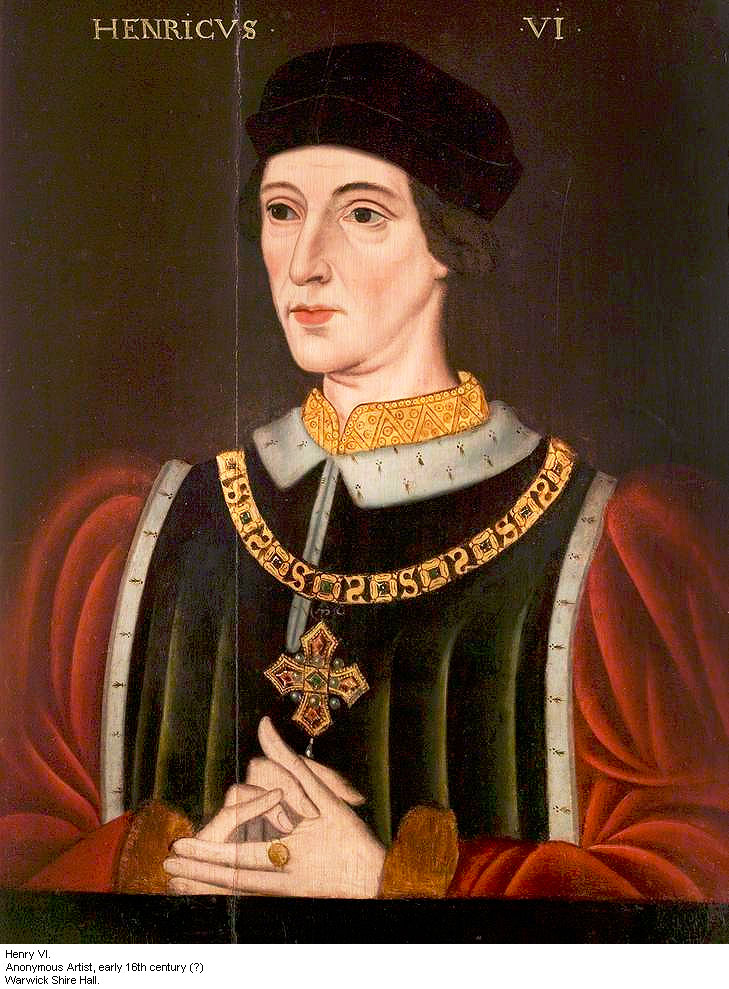
Profile - Henry VI Part 1 1421-1460


The reign of Henry VI on the English throne was a turbulent and fractious one.


BABY KING
The son of King Henry V and French Princess, Catherine of Valois, was born at Windsor on 6 December 1421. The warrior king, Henry V, was campaigning in France when he suddenly died of dysentery on 31 August 1422. Henry VI became the youngest  ever English monarch the next day and the 10-month-old Henry was proclaimed king of France when his grandfather, Charles VI, died a few weeks later. 

The English nobles swore their allegiance to Henry VI and a regency council gathered to rule in the king's name. Henry VI' mother was kept out of the regency by the king's uncles, John, Duke of Bedford and Humphrey, Duke of Gloucester. Bedford was appointed senior regent of the realm and regent of France whilst Gloucester was appointed Protector and Defender of the Realm.

Bedford knighted the king at Leicester in May 1426 and Henry VI was crowned King of England at Westminster Abbey on 6 November 1429. This was in reaction to Charles VII's defiant coronation as King of France at Reims Cathedral four months earlier.

Henry VI himself was crowned King of France on 26 December 1431 but his power eroded when English allies in Burgundy changed their allegiances and sided with Charles VII during the Congress of Arras in 1435. Bedford died a week before the congress concluded.

A shy and pious Henry VI came of age in 1437 and his peaceful policy towards France caused divisions at court. The king's half-uncle, Cardinal Beaufort, and William de la Pole, Earl of Suffolk, sought peace whilst Gloucester, and Richard, Duke of York, looked for war.

Beaufort and Suffolk convinced Henry VI that a royal marriage to Charles VII's niece, Margaret of Anjou, would bring peace with France. The French king seized on this opportunity and negotiated with Suffolk the return of English territories back to the French in exchange for the marriage. These negotiations were kept secret from the English court for around a year after Henry VI married Margaret of Anjou on 23 April 1445.
Henry VI marriage to Margaret of Anjou
Public anger towards these negotiations focused on Suffolk and the royal couple charged Gloucester with treason in 1447 for instigating this anger. Gloucester soon died in custody and Cardinal Beaufort would die shortly after. Henry VI promoted the Cardinal's nephew, Edmund Beaufort, to 2nd Duke of Somerset and gave him the lieutenancy of France. This caused friction with York who had been demoted from Lieutenant of France to be Lieutenant of Ireland.

Somerset's command of France was disastrous and England's south coast was fearful of a French invasion. Discontent boiled over when Suffolk was caught and executed after Henry VI had allowed him to flee into exile. 


REBELLION
The south-east rebelled under Jack Cade who declared he would "destroy" the king and "bring" York to the throne. Henry VI initially sent a small force to quash the rebellion but fled to Warwickshire once Cade marched on London. Cade was unsuccessful in replacing the king but York returned from Ireland in 1450 to take his place on the council.

York demanded Somerset's arrest over France, which Henry VI initially agreed but the queen's intervention would made Somerset Captain of Calais. An agitated York asserted his claim to the throne in 1452 by marching his troops to London.The city was barred to York and the duke had to concede to the king after being outnumbered in Dartford, Kent. The king placed York under house arrest for two weeks until the duke pledged allegiance and Henry VI would later strip York of his terms of office.
Henry VI sits as Duke of Somerset (centre) and Duke of York argue
Somerset's French campaign began to haunt Henry VI, with the heavy loss at the Battle of Castillon in 1453, reducing England's French domain to just Calais. The king now descended into a mental breakdown with acute schizophrenia and hallucinations preventing him to recognise the birth of his son, Prince Edward, on 13 October 1453.York was declared Protector of the Realm in 1454 and placed Somerset in the Tower of London, but he would soon be released after Henry VI regained his senses later that year.

York took up arms and intercepted the king's forces on 22 May 1455 as Henry VI made his way to Leicester for a Great Council meeting. York had gained the support of the wealthy Neville family and he relied on the father and son of Earl of Salisbury and Earl of Warwick to outnumber the royal forces at the First Battle of St. AlbansThe quick battle through the streets of St. Albans saw the death of Somerset and Henry was deserted by his standard bearer. The king took refuge in a tradesman's house before being discovered by York and escorted back to London.


PRISONER
York declared himself Constable of England and later Protector of the Realm once again when  Henry VI had another bout of mental illness during his imprisonment. The king recovered in February 1456 and had to accept York's influence at court. The queen was less accommodating to York and convinced Henry VI to move court to her heartland of Coventry.

Henry VI tried to nullify the discord between his northern lords and their supporters by having peace talks in 1458 but the queen continued her grievances. York, Salisbury and Warwick were summoned to the Great Council at Coventry and responded by gathering troops at the Battle of Ludford Bridge on 12 October 1459. 

The king promised the Yorkists that he would grant pardons to those who put down their arms and this was too much of an offer for Warwick's Calais troops, led by Andrew Trollope. York and his commanders fled Ludford into exile shortly after hearing of Trollope's treachery. The royal couple issued an act of attainder later that year which forfeited the Yorkist commanders' lands and titles. 

Warwick, Suffolk and York's eldest son, Edward, Earl of March, returned to England in June 1460 and met the royal forces at the Battle of Northampton on 10 July 1460. Treachery struck again, this time in favour of the Yorkists, as Lord Grey of Ruthin, gave March a helping hand over the Lancastrian front line defences. 

Henry VI's commanders defended their king to the death and a victorious Warwick greeted the king outside his royal tent. Warwick and his men swore their allegiances to the king and escorted him to London once more.
Warwick kneels before Henry VI before taking him to London as depicted by Graham Turner
Henry VI's place on the throne was now in doubt as York arrived in London three months later to take the throne but Henry VI's supporters denied York to sit on the throne. After weeks of negotiation, an act of accord was passed that disinherited Prince Edward and recognised York (and his subsequent heirs) as Henry's successors. York was once again made Protector of the Realm and Henry VI was his prisoner.

Meanwhile, the queen was building Lancastrian support and met with the new Scottish king, James III to offer the English border town of Berwick-upon-Tweed in exchange for his support.

York left London to meet the growing Lancastrian forces at the Battle of Wakefield and left Warwick to watch over the royal captor.