Showing posts with label 2nd Duke of Somerset. Show all posts

Sunday, April 12, 2015

A Rosy and Thorny Game of Thrones - Part 2


Sunday sees the return of the HBO TV series Game of Thrones, the medieval fantasy based on A Song of Ice and Fire novels by George R. R. Martin, which was influenced by the Wars of the Roses. The Daily Mail and History Behind Game of Thrones compare the Cousin's War in 15th Century England and the War of the Five Kings that ravaged across Westeros in Game of Thrones.

The conflicted characters of Game of Thrones share many characteristics with the real-life players of the Wars of the Roses as rival families fought for the throne and once again there are spoilers below for those who aren't up-to-date with Game of Thrones. 

HOUSE STARK/YORK
The first family introduced in the Game of Thrones TV Series was the House of Stark led by patriarch Lord Eddard 'Ned' Stark. Ned, played by Sean Bean, was the Warden of the North who served his friend, Robert Baratheon, during the King's successful rebellion and he begrudgingly left his northern stronghold of Winterfell after being awarded the title Hand of the King in the first episode.
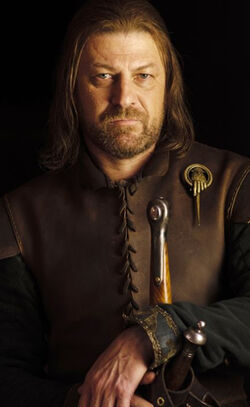
Ned Stark with his sword Ice
Despite the title's suggestion, Richard, Duke of York didn't command the north of England as strongly as Ned Stark. Land titles were often inherited and York's northern territories were limited to Sandal Castle in Wakefield whilst the north was mainly owned by the Neville and Percy families.

York served as Lieutenant of both France and Ireland but would soon be passed over for the favourites of England's king and queen. York's loyalty to the crown was tested by the queen, Margaret of Anjou, who would exchange scathing arguments similar to those had by Ned and Queen Cersei.

The turning point in Series One of Game of Thrones is when King Robert dies and Ned becomes Protector of the Realm to rule until King Joffrey comes of age. York was also named Lord Protector in 1453 when an incapacitated Henry VI was unable to rule. Ned soon discovers that King Joffrey and his siblings are bastards born from incest and publicly declares Joffrey illegitimate in the Throne Room.
Richard, Duke of York, claimant to the throne
York had arguably a better claim to the throne than Henry VI and would publicly declare this by placing his hand on the empty throne in October 1460. York wasn't betrayed as severely as Ned in the Throne Room but courtiers didn't support York as much as he would have liked and would spend weeks negotiating that resulted in decreeing York would inherit the throne after Henry VI.

Ned, however, was imprisoned for treason and his confession in the Sept of Baelor didn't dissuade Joffrey from having Ned beheaded and put on the battlements of the Red Keep. York would never get the chance to inherit the throne after dying in battle during December 1460 and he too would have his decapitated head spiked and put on display.

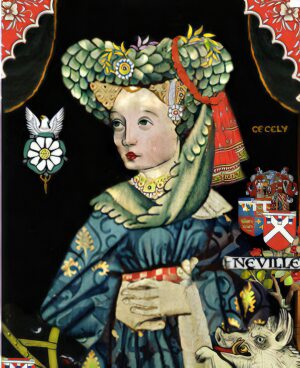
The wives of Lord Stark and York would also share similarities. Lady Catelyn Stark, played by Michelle Fairley, was part of the Riverlands' House Tully whilst Duchess of York, Cecily Neville, was of the northern Neville family.
Catelyn Stark would negotiate terms for her son's rebellion
York's wife was known as 'Proud Cis' and Catelyn would also share this trait as she hated to be reminded of Ned's infidelity and acted coldly around Ned's bastard son, Jon Snow.

Catelyn was actively involved in negotiating alliances with Lord Walder Frey and Renly Baratheon. Cecily would also negotiate for peace with Margaret of Anjou and the Council following her husband's several challenges to royal authority. Lady Stark's sister, Lysa, had married Lord John Arryn who would die as Hand of the King and caused Lysa to remove herself to the Vale of Arryn. The Stark sisters reunion at the Eyrie didn't go as Catelyn would have liked as Tyrion Lannister escaped execution and Lysa refused to commit troops to the Stark cause.
Cecily Neville would outlive her husband and 13 children
Cecily would also be reunited with her sister, Anne, in harsh circumstances after York had fled the battlefield and left his Duchess to the mercy of the Lancastrian forces. Cecily and her three youngest children were placed under the care of Anne Neville, Duchess of Buckingham, who was married to the Lancastrian commander, Henry Stafford, Duke of Buckingham. 

The fates of Lady Stark and the Duchess of York would however differ. Cecily would live to the age of 80, outliving all of her 13 children, two of which became kings, and saw her grand-daughter become queen. Catelyn would live a much shorter live after falling victim to Walder Frey's betrayal and was killed alongside her eldest son, Robb at the Red Wedding.

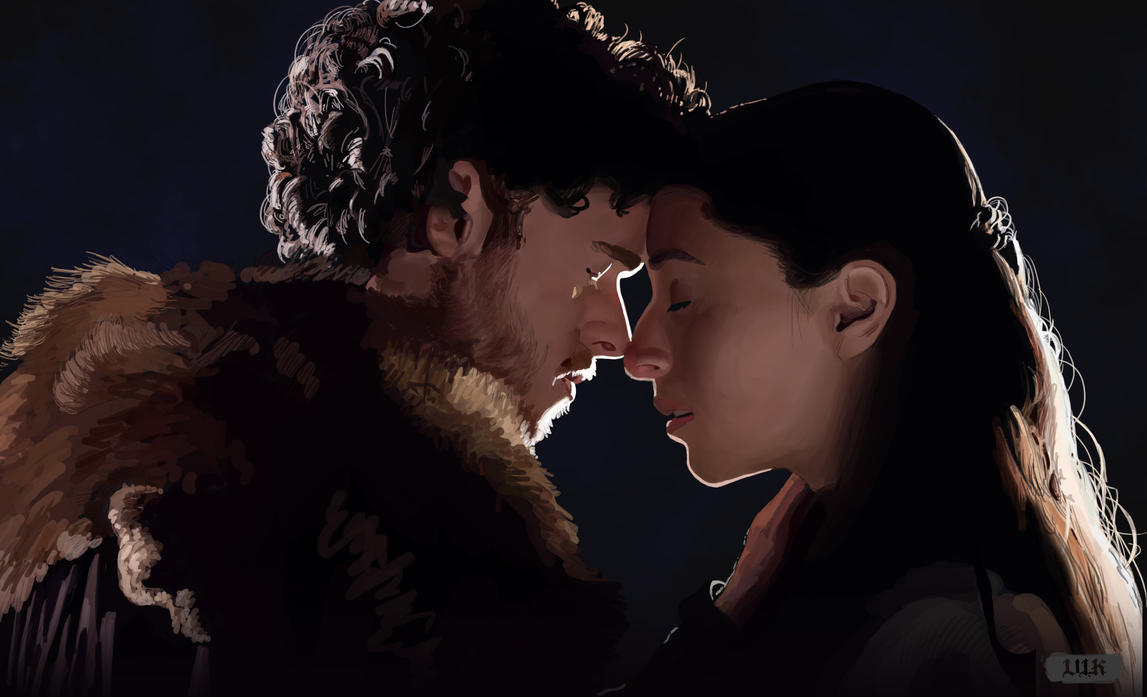
Robb Stark, played by Richard Madden, had taken up arms in his father's defence and was named King of the North by his men. The eldest son of York, Edward IV would also take up arms following his father's death and would be proclaimed King of England in March 1461. Edward IV's victory at Towton confirmed his rule and was similar to Robb's victory at the Whispering Wood.
Robb Stark's marriage was similar to Edward IV's
Robb marched south from the Twins after negotiating a crossing with Walder Frey that involved Robb's betrothal to one of Frey's daughters. The betrothal was soon abandoned by Robb when he married Talisa Maegyr (played by Oona Chaplin)and this unwanted marriage was similar to Edward IV's union with Elizabeth Woodville. 
Edward IV was a valiant young King
The Earl of Warwick was negotiating a marriage between Edward IV and a European princess when the king married the daughter of a former squire and this alienated Warwick. Edward IV's uncle would unsuccessfully rebel against the king and was killed at the Battle of Barnet whilst Walder Frey was more successful by betraying Robb, his mother, his wife and unborn child who were killed at the Red Wedding.

Robb was himself betrayed by the Stark ward, Theon Greyjoy (played by Alfie Allen), and was reminiscent of George, Duke of Clarence's betraying his brother, Edward IV. Theon suggested a Stark/Greyjoy alliance to his surrogate brother and Robb allowed him to propose this alliance in person to Theon's father, Balon Greyjoy. This reunion would see Theon looking to prove himself to his father by betraying Robb and attacking Stark's home of Winterfell.
Theon Greyjoy couldn't resist his Iron Island roots
Clarence had aligned himself with Warwick following his brother's marriage to Elizabeth Woodville and this was affirmed with Clarence marrying Warwick's eldest daughter, Isabel Neville. Warwick's plan to overthrow the king and crown Clarence with his grandson as heir was soon thwarted and Warwick looked instead to an alliance with the exiled Margaret of Anjou. Clarence felt betrayed by Warwick and joined his brother's side at the Battle of Barnet in 1471 where they defeated Warwick.
George, Duke of Clarence, betrayed his brother
Clarence would soon rebel against Edward IV after his wife had died and would be executed for treason in 1478 by being drowned in a butt of Malmsey wine. Theon's confident and brash persona would die when he was captured and tortured by Ramsey Snow but it remains to be seen whether Theon can return to glory.

The Stark family is now led by the eldest daughter, Sansa Stark, played by Sophie Turner, who has transformed throughout the TV series. The naive 'little dove' had seen her Prince Joffrey take the head of her father and sadistically ridicule her. The Lady of Winterfell was married to Tyrion Lannister as a strategic match which Littlefinger wanted and engineered to possess the heiress of the North.
Sansa Stark, Lady of Winterfell, is highly sought after
Elizabeth of York was Edward IV's eldest daughter and was seen as a strategic match to end the Wars of the Roses. In December 1483, Elizabeth Woodville and Margaret Beaufort, mother of Henry Tudor, agreed to the marriage of Elizabeth of York and Henry Tudor that was realised in January 1486. This marriage would unite the warring York and Lannister families and was symbolised by the Tudor Rose.
Elizabeth of York became Queen
Elizabeth of York's brothers, King Edward V and Prince Richard, were last seen housed in the Tower of London in late 1483 and were presumed dead, just as the youngest Stark boys, Bran and Rickon were when Theon Greyjoy falsely displayed two charred farm boys as the Starks.
Jon Snow, like Richard, Duke of Gloucester, fought in the North
Ned Stark's bastard son, Jon Snow, played by Kit Harrington became a Man of the Night's Watch and defended The Wall against the Wildlings. Richard, Duke of Gloucester was named Lieutenant-General of the North in 1480 by his brother, Edward IV. Richard raged war against the Scots and recaptured Berwick-upon-Tweed in 1482.


HOUSE LANNISTER/LANCASTER
House of Lancaster originated from the descendants of John of Gaunt, Duke of Lancaster and ruled England for over 60 years. 

Henry V was the most famous Lancastrian king, showing warrior-like qualities in defeating the French at Agincourt and Jaime Lannister, played by Nikolaj Coster-Waldau, was known as the greatest swordsman in Westeros. Jaime's illegitmate son, Joffrey, would take the throne under the guise of King Robert's son and would show signs of madness as did Henry VI
Jaime Lannister and Henry V showed their prowess with a sword
Henry VI's first mental breakdown coincided with the birth of his only son, Edward of Westminster, who shares similarities with King Joffrey (played by Jack Gleeson) who took pleasure in meeting out justice to his captors. 
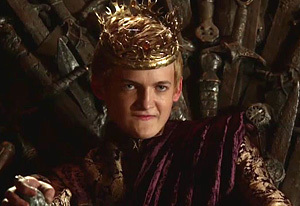
The sadistic King Joffrey 
Prince Edward was exposed to cruelty from an early age when the five-year-old boy witnessed the Lancastrian victory at the Second Battle of St. Albans. Margaret of Anjou asked her young son how the two York knights held captive should be killed and the prince requested death by decapitation, an order repeated by King Joffrey for Ned Stark.
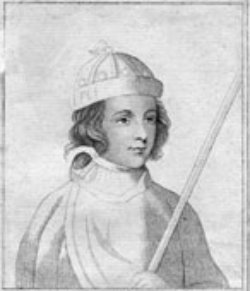
Prince Edward was aged five when he passed judgement of execution
Margaret of Anjou looked to reaffirm her son's birthright by aligning with the Earl of Warwick who betrothed his daughter, Anne Neville, to Prince Edward. 
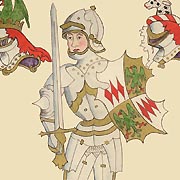
The "Kingmaker" Earl of Warwick
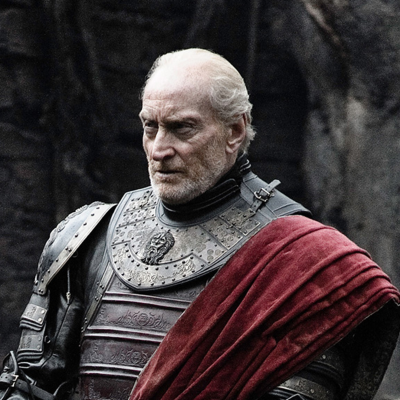
The Earl of Warwick was known as the Kingmaker for his decisive military and political actions whose lands and titles gave him vast wealth and served as inspiration for the Lannister patriach, Tywin Lannister, played by Charles Dance
Tywin Lannister
Tywin was also the richest man in the land and served twice as Hand of the King, betrothed his daughter to King Robert and saw his two grandsons sit on the Iron Throne. Tywin, like Warwick, looked to affirm his power by negotiating favourable marriages and he betrothed Cersei once again and his two grandsons to the powerful Tyrells. Joffrey's marriage to Margaery Tyrell didn't last a day after he was poisoned at the wedding feast and Prince Edward would also die young at the Battle of Tewkesbury in 1471.

Joffrey's mother, Cersei Lannister, played by Lena Headey, draws inspiration from Margaret of Anjou and Elizabeth Woodville. Cersei would act as Queen Regent during Joffrey's minority and looked to wield power but was unable to control her son.
Queen Cersei divided many in King's Landing
Margaret of Anjou had several admirers at court, the biggest being the 2nd Duke of Somerset. Somerset had negotiated the royal marriage and carried the young queen-to-be ashore when she arrived in England. Queen Margaret returned this by awarding Somerset several titles and intervened numerous times when others called for Somerset's arrest. Many wondered whether Prince Edward was a result of an adulterous liaison between the queen and Somerset, a relationship that somewhat resembles the Lannister twins of Cersei and Jaime.
Margaret of Anjou's favourtism resembled Cersei's
This incestuous relationship bore illegitimate children which were revealed as such by Ned Stark and, more publicly, by Stannis Baratheon. Elizabeth Woodville would also see her children declared bastards after an Act of Accord in 1483 ruled that Edward IV was betrothed to another when Woodville married the king.

HOUSE BARATHEON/LATER YORK
King Robert Baratheon, like Edward IV, had won a valiant war to claim the throne but times of peace allowed both kings to revel in royal luxuries. King Robert, played by Mark Addy, was over-bloated after years of excess food and drink and would die on an alcohol-fuelled hunting trip. Edward IV also led an unhealthy lifestyle towards the end of his reign and would fall fatally ill, possibly from pneumonia, in Spring of 1483.
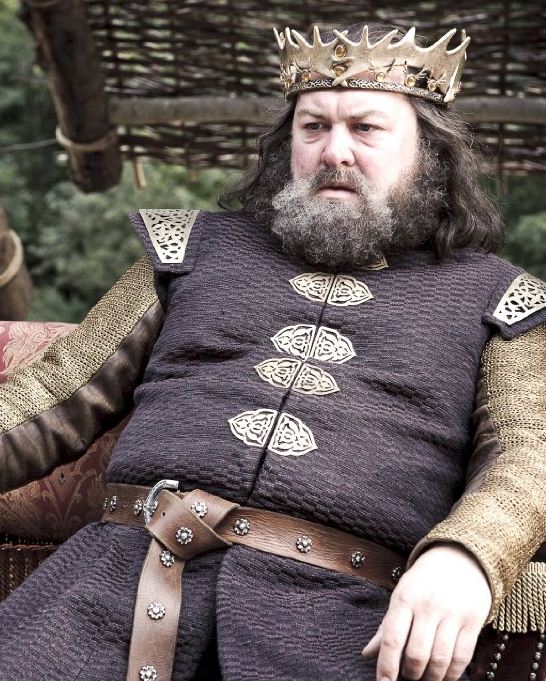
Robert Baratheon resembled an older Edward IV
Robert's two younger brothers would each look to replace him but Renly Baratheon (played by Gethin Anthony) was killed by his brother Stannis whilst George, Duke of Clarence, was executed for treason before Edward IV died.
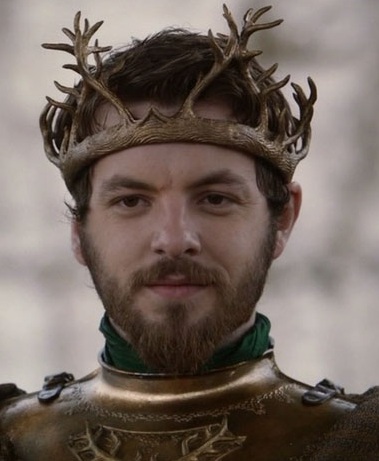
Renly Baratheon wanted the throne as did George, Duke of Clarence
Ned Stark had informed Stannis Baratheon (played by Stephen Dillane) of the true identity of Cersei's children and Stannis publicly declared them bastards following Ned Stark's execution. 
Stannis Baratheon publicly declared his nephews & niece as bastards
Richard, Duke of Gloucester, did the same when he discovered the illegitimacy of Edward IV's sons and would become King Richard III. Both Stannis and Richard III were known for their duty and believed in just law, they would also share a sickly child with Richard's son Prince Edward dying aged 10.
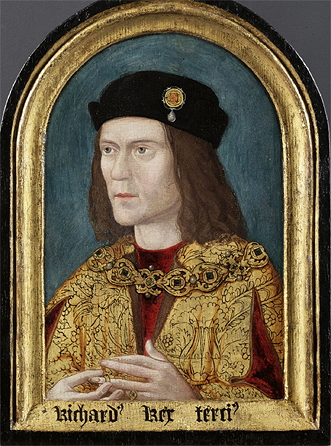
Richard III took the throne after declaring his nephew a bastard
Stannis looked to support the Men of the Night's Watch cause but arrived a day afterward the Battle of the Castle Black. He continues to pursue the Iron Throne but it remains to be seen whether he'll be successful.

HOUSE TARGARYEN/LANCASTER & TUDOR
The final Targaryen king was Aerys II, known as the Mad King, and the final Lancastrian king Henry VI would also show mental frailties. Aegon II was promoted to the Iron Throne by his mother Queen Alicent Hightower much like how Margaret Beaufort encouraged her son, Henry Tudor, to the English throne, to become Henry VII.
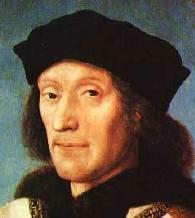
Henry VII provided inspiration for at least two Targaryens
Henry VII had been sent into exile during Edward IV's reign - as had Daenerys Targaryen (played by Emilia Clarke). Daenerys was the daughter of Aerys II and fled to Essos with her brother Viserys and the Mother of Dragons is currently planning a return to Westeros with her dragons to claim the Iron Throne.
The exiled 'Mother of Dragons' Daenerys Targaryen
Henry Tudor was descended from the Welsh Tudor family and he flew the Welsh Dragon on his banners when he successfully won the crown by defeating Richard III at the Battle of Bosworth in 1485. This would then usher in the Tudor dynasty that ruled England for over 100 years.

HOUSES TULLY & TYRELL/NEVILLE
In order to successfully claim the throne you need support from lesser families. The Neville family descended from the Beauforts of John of Gaunt were originally sympathetic to the Lancastrian cause. Ralph Neville betrothed his nine-year-old daughter, Cecily Neviile to the Duke of York, similar to Catelyn Tully's betrothal to Ned Stark. 

Cecily's brother, Richard Neville, Earl of Salisbury, would later fight alongside York and his valour was similar to that shown by Catelyn's uncle Bryden Tully (played by Clive Russell).
Bryden 'Blackfish' Tully resembled the Earl of Salisbury
Salisbury's son, the Earl of Warwick, would also look to betroth his children in order to affirm his power. His eldest daughter, Isabel, was married to George, Duke of Clarence, as part of Warwick's original plan to overthrow Edward IV but this provided to be futile. Warwick would then use his other daughter, Anne, in a marriage with Lancastrian Prince Edward, in a second attempt to overthrow Edward IV.

Anne Neville would go from a Lancastrian Princess to a Yorkist Queen when Anne later married Richard, Duke of Gloucester, and became Queen Consort when Richard became king in 1483.
Anne Neville would be Princess and later Queen
Margaery Tyrell (played by Natalie Dormer) would also rise to power and told Littlefinger that she wants to be "THE queen" and not just a queen after the death of her betrothed Renly. 
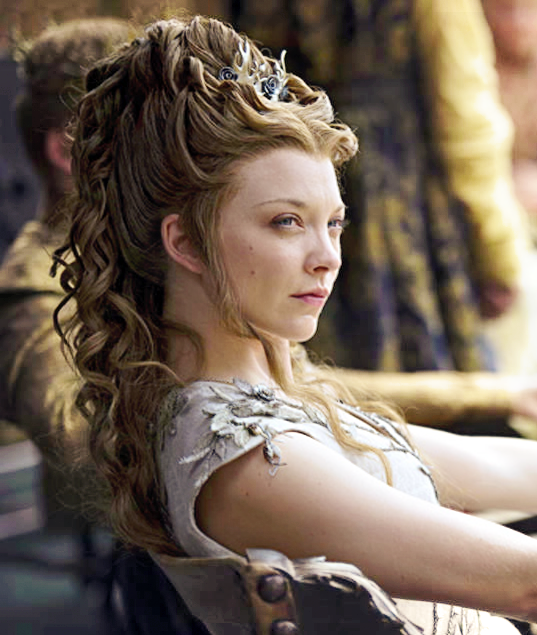
Margaery Tyrell has aligned herself with two kings and one pretender
The Tyrells soon joined Tywin Lannister in fighting back Stannis' attack on King's Landing at the Battle of Backwater Bay and were rewarded by having Margaery betrothed to King Joffrey. Not to be deterred by Joffrey's death (engineered by Margaery's grandmother) Margaery would set her sights on the next king, Tommen Baratheon.

SIGILS & MOTTOS
Heraldry rose in prominence during the Middle Ages where soldiers could identify friend or foe on the battlefield. This soon developed into coats of arms where family lineage and personal emblems were displayed. Unlike the family sigils of Westeros, medieval banners would contain different emblems amongst family members. 

Whilst the Starks fought below Direwolf banners, the Yorkists flew under the Falcon and Fetterlock of the Duke of York, the Sunne in Splendour of Edward IV, the Black Bull of Duke of Clarence and the White Boar of Richard III. The White Rose of York was used early on during the so-called Wars of the Roses whilst the Red Rose of Lancaster was only used towards the end of the conflict with the banner of the  Welsh Red Dragon being flown by Henry Tudor's men.
The York symbols White Rose and Falcon & Fetterlock
Each family in Westeros has it's own motto such as Stark's "Winter Is Coming" or Lannister's "Hear Me Roar!" Mottos were usually reserved for English royalty and usually invoked fealty and loyalty with Edward IV's "Comfort and Joy", Richard III's "Loyalty Binds Me" and Henry VI's "God And My Right."  

Friday, April 10, 2015

Profile - Cecily Neville Part 1 1415-1460


The 80 years of Cecily Neville's life would see her family's power rise, fall and rise again as she became wife of a pretender to the English throne, mother to the two Yorkist kings, and grandmother to the first Tudor queen. Cecily, however, would tragically outlive her husband and all of their 13 children.

'ROSE OF RABY'
Cecily Neville was born on 3 May 1415 at Raby Castle in Durham as youngest daughter to parents Ralph Neville, 1st Earl of Westmorland, and Joan Beaufort with Cecily's good looks rewarded with the sobriquet 'Rose of Raby'. Her maternal grandparents were the English prince, John of Gaunt, 1st Duke of Lancaster, and Katherine Swynford. The family connections to the Beauforts would see Margaret Beaufort, mother of Henry Tudor, as Cecily's second cousin.

Ralph Neville had become the royal warden of Richard, Duke of York after York's father, Richard of Conisburgh,  was condemned to death in 1415, and the young duke arrived at Raby Castle in December 1423 to live with the Nevilles. Cicely's father betrothed her to York in October 1424 at the expense of 3,000 marks to the crown to release York from his wardship. Cicely was 14 years-old and York was 18 when the couple married in October 1429 and would remain married for 31 years with Cicely bearing 13 children, seven of whom survived childhood.
Fotheringhay Castle in Northamptonshire was a favourite family residence
York's vast estates would see Cecily live in Ludlow Castle in Shropshire, Fotheringhay Castle in Northamptonshire and Baynard's Castle in London. The contented marriage saw Cicely follow her husband to France and Ireland during York's time in office. Rouen in France would see the births of Cecily's eldest living sons Edward and Edmund and second living daughter, Elizabeth, between 1443 and 1444.The third living son, George, was born in 1449 in Dublin, Ireland and Cicely would bear children across 17 years and daughters Anne, Margaret and youngest son Richard were all born at Fotheringhay Castle. This would indicate that Fotheringhay Castle was the family's favourite residence.

Cicely was renowned for her piety, attending eight services a day, and this would make a mockery of later Lancastrian propaganda that slandered her as an adulteress with the rumour that Edward IV was born a bastard to Blaybourne, a French archer. The Duchess would vehemently protest against this slander and Cicely's own pride and temper would bring her the nickname 'Proud Cis'.

LADY PROTECTOR
The Duke and Duchess of York attended the wedding of King Henry VI and Margaret of Anjou in May 1445 and the queen would show court nepotism at Duke of York's expense. Cecily's first cousin, Edmund Beaufort, 2nd Duke of Somerset, replaced York as Lieutenant of France but wasn't able to emulate York's time in office as France reclaimed Normandy along the English Channel coast.

Southern England was fearful of a French invasion and Jack Cade led an unsuccessful rebellion against the king and his "friends". Cade appealed to York supporters by calling himself Mortimer after York's ancestors and demanded that Henry VI removed his friends or the king would be replaced by York if this wasn't done.

York had no association with Cade but the rebellion caused many at court to ponder whether York was going to claim the throne when he travelled from Ireland to England in September 1450. York protested his allegiance to the king and demanded Somerset's arrest over France. Henry VI initially agreed but the queen intervened and duly promoted her court favourite to Captain of Calais. York was in turn given a much the lower ranked title of Justice of the Forest South of the Trent. 
Cecily's nephew, Earl of Warwick, originally supported his Beaufort relatives
A frustrated York returned to his estates. Cecily, pregnant with Richard, may have encouraged York to reassert his power and birthright which led to her husband gathering troops and marching on London but he would find the capital gates locked. York reached Dartford in Kent and faced off against the royal troops including Cecily's brother, Richard Neville, Earl of Salisbury and his son, Richard Neville, Earl of Warwick. York looked for peace and demanded Somerset's arrest but the queen intervened once again.  

Margaret of Anjou was incensed to see Somerset being carried away in chains and a showdown in the royal tent saw Queen Margaret demand York's arrest instead. The Duke returned to London being paraded like a prisoner at the head of the royal party.
Cecily and the queen met at the shrine of Our Lady of  Walsingham
Cecily came to her husband's defence and the queen agreed to hear the Duchess' pleas for clemency at the shrine of Our Lady of Walsingham in Norfolk. The Duchess would later write to the queen and praised the meeting where Cecily surmised that her husband's "infinite sorrow and unrest of heart" caused him to be "estranged from the grace and benevolent favour" of the king. Cecily's plan worked as the queen stopped pursuing York's imprisonment but York he was publicly humiliated at St. Paul's Cathedral where he swore an oath of allegiance to the king. 

York was mindful of his own father's fate and withdrew to his estates once again to spend time with the family. York also provided much needed support to his in-laws in their land disputes with Somerset and Neville's northern rivals, the Percies

The royal couple welcomed their long-awaited heir in 1453 when the queen gave birth to Prince Edward. Henry VI was unable to acknowledge his son's existence after the king descended into a severe bout of mental illness following England's heavy loss at the Battle of Castillon. England needed a leader as York returning to court and was elected Lord Protector in March 1454. York brought much needed order and appointed his brother-in-law, Salisbury, as Chancellor and his nephew, Warwick, became Captain of Calais.

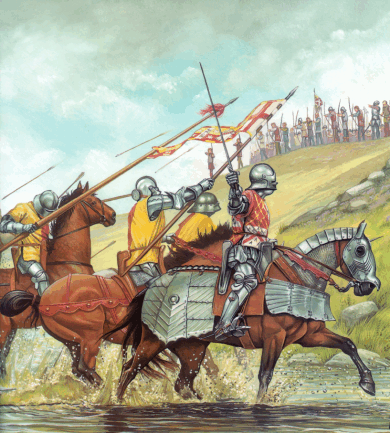
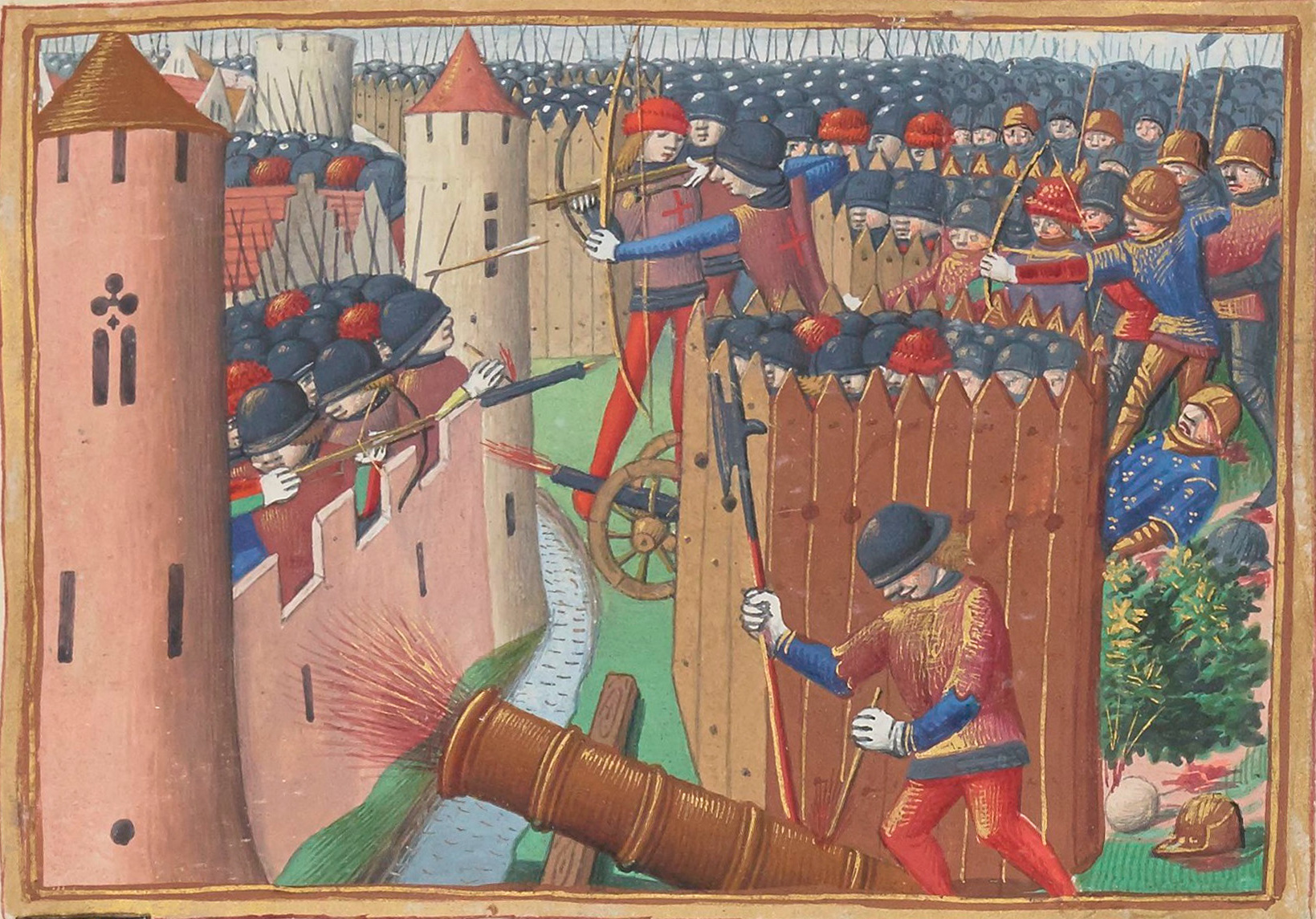
York's control of government didn't last long as Henry VI regained his senses during Christmas 1454 and Somerset, imprisoned in the Tower by York, was released. Parliament was to reconvene in Leicester in May 1455 and York saw this as a ruse by the queen to arrest him. Cecily's brother and nephew joined her husband and intercepted the royal army at the First Battle of St. Albans where Somerset was killed and the king captured. 
Cecily's brother successfully fought off a Lancastrian charge at Blore Heath
York would return as Lord Protector after Henry VI relapsed towards the end of 1455 and a rejuvenated king kept Warwick on as Captain of Calais after Henry VI recovered in 1456. The queen would now target Cecily's nephew with charges of piracy and a suspected murder plot against Warwick, further antagonising the Yorkist and Lancastrian divide. York and the Nevilles gathered troops and met at Ludlow in October 1459 after Salisbury had defeated a portion of the royal army at the Battle of Blore Heath en-route to Shropshire.  

DESERTED
Henry VI led his troops to just south of Ludlow and offers of royal pardons proved too tempting to York's army as Warwick's Calais troops commanded by Andrew Trollope, defected. The Battle of Ludford Bridge proved to be bloodless after York abandoned his army and fled the battlefield. York took Edmund, now Earl of Rutland, to Ireland whilst Edward, now Earl of March, joined his uncle and cousin in fleeing to Calais. 
Cecily and her children were captured in Ludlow Market Square
Cecily was left to defend Ludlow with her three youngest children and they were discovered by the Lancastrian army at Ludlow Market Cross. Cecily pleaded for clemency once again and was placed under the care of her sister Anne, Duchess of Buckingham, and her husband, the Lancastrian commander, Henry Stafford, Duke of Buckingham.

The Duchess of York and her youngest children stayed with the Buckinghams at Tunbridge Castle in Kent and it's close proximity to Calais would have allowed possible secret communications between Cecily and her eldest son. Cecily, like seven years before, defended her husband at court and asked for a royal pardon. She was unsuccessful in preventing her husband, brother and nephew being given an Act of Attainder which forfeited all their lands and titles. The queen, possibly remembering the time at Walsingham, may have taken pity on Cecily and the defunct-Duchess was granted £600 a year to support herself and her children.
Cecily resided in London at Banyard's Castle before York returned to England
Cecily's nephew and husband met in Ireland during the spring of 1460 to plan a return to England and Warwick, Salisbury and Edward landed in Sandwich on the Kent coast in June 1460. Salisbury held London and welcomed his sister to the capital as she took up residence in Banyard's Castle following the Yorkist victory at the Battle of Northampton. Warwick and Edward faced the royal troops in July 1460 near Northampton where treachery would allow March to take the vanguard and breach Lancastrian defences. The Lancastrian commanders were taken by surprise once the Yorkists were behind the front-lines and Buckingham would die defending the king who would once again be captured and brought back to London.

QUEEN-IN-WAITING
York returned to England on 8 September 1460 and immediately sent word to Cecily for the married couple to meet at Hereford. Cecily travelled to the west country in a charriot or litter dressed in blue velvet and carried by eight horses. York likely discussed his intentions of claiming the throne with Cicely at Hereford and, wIth Margaret of Anjou fleeing to Scotland, Cecily acted every part of a queen as she carried the royal arms during her husband's procession to London.
The Duke and Duchess of York reunited in Hereford before proceeding to London
Her husband's bold move in claiming the throne from Henry VI got little support in Parliament including Warwick and Salisbury who weren't aware of York's plan. A compromise in Parliament was struck in late October 1460 with an Act of Accord declaring York as heir-apparent and disinherited Prince Edward. York and his heirs would now take the throne once Henry VI died and Cecily became a queen-in-waiting. 

Word soon spread that Margaret of Anjou was courting Scottish support and the Percies were raiding the Yorkshire estates of York and Salisbury. York sent Edward to the Welsh Marches to rally the troops, Warwick held London and York took Edmund and Salisbury north to face the Lancastrians. Cecily gave her husband and son a fond farewell in early December 1460 and expected to welcome their return in the New Year. This never happened and Cecily was devastated when she heard of the deaths of her husband, second son and eldest brother at the Battle of Wakefield.

Monday, March 30, 2015

Profile - William de la Pole, Duke of Suffolk, 1396-1450


William de la Pole, Duke of Suffolk, was a favourite in Henry VI's court whose self-invested policies would lead to public hatred and his death.

COMMANDER
He was born on 16 October 1396 at Cotton, Suffolk, son to Michael de la Pole, 2nd Earl of Suffolk, and Katherine de Stafford. Suffolk had served loyally in France for 17 years where he was seriously wounded in the Siege of Harfleur in 1415, commanded English forces at the Siege of Orléans in 1429 and surrendered shortly afterwards at Jargeau. Suffolk remained a prisoner of war until he was ransomed in 1431.
Suffolk unsuccessfully commanded the English in the Siege of Orleans
Suffolk was rewarded for his service when he returned to England by being appointed Constable of Wallingford in 1434. He had been awarded command of Orléans after the death on 3 November 1428 of his friend, Thomas Montacute, 4th Earl of Salisbury. After returning from France, Suffolk married Salisbury's widow, Alice Chaucer, grand-daughter to poet, Geoffrey Chaucer. Suffolk was tired of war with the French and aligned himself with Cardinal Henry Beaufort who shared the same anti-war sentiment.

Beaufort clashed with Henry VI's uncle Humphrey, Duke of Gloucester, during the king's minority. Gloucester wanted to continue war with France following the disastrous Treaty of Arras in 1435 when England were betrayed by their traditional ally, Burgundy. Worse was to come for the young king when his mother, Catherine of Valois, died on 3 January 1437 and the king's half brothers, Edmund and Jasper Tudor, were placed in the care of Suffolk's sister, abbess of Barking Abbey, Katherine de la Pole.

Henry VI came of age in 1437 but still deferred to his Council and rewarded Beaufort's faction with lands and titles. Richard, Duke of York's lieutenancy of France was undermined by John Beaufort, 1st Duke of Somerset, naming himself Lieutenant of Aquitaine and Captain-General of Guienne. The king gave Somerset much needed troops and resources away from York and this would be the first of many disregards the king had for York, setting in motion the conflicts that lay ahead. 

MATCH MAKER
Somerset's daughter, Margaret Beaufort, was born on 31 May 1443 and Somerset negotiated with the king that Margaret's wardship and marriage should only be decided by her mother. Somerset soon fell out of favour with the king and subsequently died on 27 May 1444 leaving Margaret as heiress. Henry VI broke the agreement four days later by giving Margaret's wardship to Suffolk and the heiress remained with her mother.

Suffolk's only legitimate heir, John de la Pole, was born on 27 September 1442, and Suffolk betrothed him to Margaret Beaufort. The king himself had yet to wed and Cardinal Beaufort and Suffolk looked to a French alliance to bring peace between the two countries.

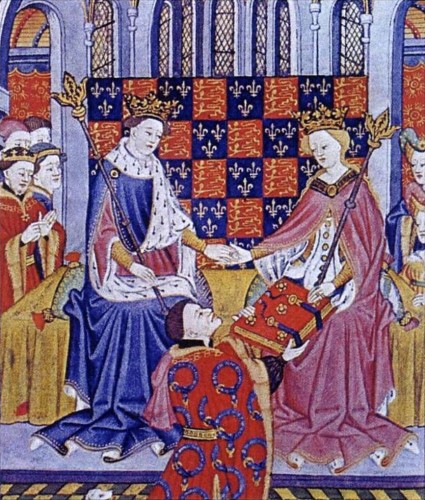
The king was attracted to the commissioned portraits of Margaret of Anjou, niece of the French King Charles VII, and Suffolk was begrudgingly sent to France to actively participate in discussions he knew would be unpopular with the English public. Margaret's father, Rene of Anjou, was penniless and made it plain to Suffolk that there wouldn't be a customary dowry. Rene went further by demanding the English-owned lands of Maine and Anjou to be returned to him and this was backed by Charles VII.
Suffolk brokered the marriage of Henry VI and Margaret of Anjou 
Suffolk knew these demands would infuriate the English court and public alike but Henry VI readily agreed when he discovered the Burgundian prince, Charles Count Nevers, was also seeking Margaret's hand in marriage. Suffolk included the caveat of England retaining their French conquests of Aquitaine and Normandy but he was unable to include a two-year truce in the Treaty of Tours. 

Suffolk met the future queen at Tours and was impressed with her beauty and poise. He prepared Margaret for her future role and carried her ashore after Margaret got sea sick from the English Channel crossing. Suffolk's wife soon became one of the queen's ladies in waiting.

'JACKNAPES'
The duke's ascent to power from his merchant class beginnings led to Suffolk earning the nickname 'Jacknapes' for being an upstart and his enemies accused him of having an affair with the queen. The 15-year-old queen was indeed in awe of the charming, suave and kindly Suffolk who, 33 years her senior, was seen as a father-figure to replace her own absent father.  The rumours were fueled when Suffolk called the couple "ye lover" and "ye flower" in his verse to the queen, "How ye lover is set to serve ye flower... Mine heart is set and all mine whole intent."

Suffolk's rise to power was complete in 1447. The year began with Parliament meeting at Bury St. Edmonds in Suffolk where the duke charged Gloucester for treason and spreading rumours of the queen's infidelity with Suffolk. Gloucester denied all charges but Margaret coldly told Gloucester that "the King knows your merits, my lord." Gloucester was soon arrested and died under house arrest. Suffolk was seen to have murdered the king's uncle but evidence pointed to death of the 57-year-old gluttonous duke by natural means, possibly from a stroke.
Humphrey, Duke of Gloucester's death cleared the way for Suffolk
Cardinal Beaufort death on 15 March 1447 brought his nephew Edmund Beaufort, 2nd Duke of Somerset, and Suffolk in control of government with Suffolk being promoted to Chamberlain, Admiral of England and Captain of Calais. York was proving to be an obstacle for the Beaufort faction and Suffolk effectively exiled him by naming York as Lieutenant of Ireland and gave York's previous position as Lieutenant of France to Somerset. 

Suffolk's influence and prestige was crowned in 1448 when he became the first to hold a dukedom without being a member or relative of the royal family. Public opinion had been against Suffolk since the royal marriage negotiations and this turned to hatred when Somerset's disastrous lieutenancy of France saw the French renege on their promises to leave Normandy and Aquitaine alone to the English.

DOWNFALL
Suffolk's supporters in parliament deserted him and on 9 January 1450, Adam Moleyns, Bishop of Chichester and former Lord Privy Seal, was in Portsmouth explaining Suffolk's actions to soldiers returning from France. Moleyns had brought the soldiers long awaited wages but the soldiers turned on Moleyns and lynched him after receiving less than expected wages.  

Suffolk looked to reaffirm his power base and secured the marriage of his son John to his seven-year-old ward, Margaret Beaufort, to ensure his heirs would have royal blood. He addressed Parliament on 22 January 1450 and reminded them that he had loyally served the crown home and abroad for almost 40 years and that the recent 'great infamy and defamation' was misunderstood. Parliament ignored Suffolk's pleas and on 26 January 1450 they petitioned the king for his arrest and impeachment.

The king obliged and Suffolk was sent to the Tower of London to await charges that were handed down on 7 February 1450. Amongst the most serious of charges against Suffolk was conspiring with the French ambassador to plot a French invasion of England in 1447 but no evidence could support this claim. Under the royal prerogative, Henry VI decreed that he would pass judgement on Suffolk and requested him to explain himself. Suffolk denied all charges and described them as "too horrible to speak more of, utterly false and untrue." The queen attempted to rescue her court favourite and convinced the king to send Suffolk into exile.

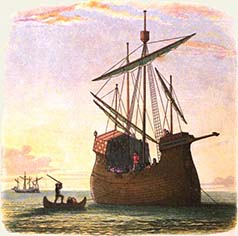
Parliament and it's people were furious at the royal disregard for justice and Suffolk faced a mob as he traveled to Wingfield in Suffolk before fleeing the country. Suffolk wrote to his son and implored him to be loyal to God and his sovereign before leaving for Calais on Thursday 30 April 1450. That night, Suffolk was intercepted in the Straits of Dover by the ship, Nicholas of the Tower, and the duke was disheartened that he had to escape the 'danger of the Tower' which a seer had prophesied.
Sailors aboard Nicholas of the Tower caught, tried and executed Suffolk
"Welcome, Traitor!" greeted Suffolk when he came aboard the Tower and was found guilty of his crimes two days later. Suffolk was taken on to a small boat in front of his fleet of three ships and was executed by a rusty sword that took six strokes to chop off his head.

Suffolk's body was dumped on a Dover beach and wasn't moved for a month until the king ordered it to be removed and later buried at Carthusian Priory in Hull. His death was revealed to the queen by Alice Chaucer and Suffolk's wife must have been struck by how grief-stricken Margaret was as the queen didn't eat for three days and wept uncontrollably.

Margaret of Anjou's grief soon turned to anger as she looked to Somerset and her courtiers to avenge her beloved Suffolk with the Duke of York becoming the queen's primary target.

Sunday, March 29, 2015

Profile - Edmund Beaufort, 2nd Duke of Somerset, 1406-1455


Edmund Beaufort, 2nd Duke of Somerset, enjoyed favouritism at the royal court despite his ineptness and created many enemies, the biggest of which was Richard, Duke of York.

RISE TO POWER
The Duke was born in 1406 to John Beaufort, 1st Earl of Somerset and Margaret Holland and his paternal grandparents were John of Gaunt, Duke of Lancaster, and his mistress, Katherine Swyford. 

Somerset' rise to power owes credit to the actions of his uncle, Cardinal Beaufort, who wielded influence on the Privy Council and Somerset became Lieutenant of France in 1446. York was expecting a third term in office in France and was aggrieved to be replaced by Somerset.
Cardinal Beaufort - Somerset's powerful uncle
The French campaign of the late 1440s turned into a disaster for Somerset who was unprepared for France breaking truce and taking Normandy from the English. Somerset, stationed in Rouen, negotiated with the French to hand over the city if they allowed England to keep towns along the Norman coast. The French soon broke terms and captured the ports of Honfleur and Harfleur, famously won by Henry V almost 35 years previously.

DISCONTENT
England was now full of discontent following the capitulation in France and the south coast was fearful of a French invasion. Jack Cade led a rebellion against the king and he publicly named York as a successor to the throne. York's claim to the throne was a strong one with him being great-great-great grandson to Edward III's third son, Lionel of Antwerp and grandson to Edward III's fifth son, Edmund of Langley. Somerset also had royal blood as he descended from Edward III's fourth son, John of Gaunt, and the descending Beauforts were declared legitimate by Richard II on the provision that they wouldn't claim the throne. Many at court wondered whether Somerset would actually stake a claim to the throne after Cardinal Beaufort had died in 1447 and the king had yet borne an heir. 

Somerset's loss of Normandy was completed in July 1450 when he handed Caen over to the French and York demanded that Somerset be held to account. King Henry VI agreed to arrest Somerset but his wife, Margaret of Anjou, convinced the king to not only remove charges against Somerset, but to also appoint him as Constable of England. The 20-year-old queen had grown close to Somerset and rumours spread throughout court that Margaret was cuckolding the king with Somerset.
Margaret of Anjou - Somerset's confidant and rumoured lover
York returned to England from his lieutenancy of Ireland in September 1450 and implored the king to imprison Somerset for his failures. Parliament impeached Somerset three months later and was taken to the Tower of London but the queen intervened once again and ordered his releases. Londoners loyal to York were incensed and ransacked Somerset's home, much to the king's dismay.

Troops were rallied by York and marched to London to find the capital gates locked. York faced Henry VI's army at Dartford on March 2 1451 and the king agreed to York's demands of arresting Somerset and declaring York his heir in exchange for the duke's allegiance. The queen, unaware of the bargain, saw her beloved Somerset arrested the next day and argued with the king for his release. 

York entered the king's tent to continue negotiations and came across the queen, with Somerset by her side, arguing with the king. Margaret projected her anger towards York and demanded him to be arrested instead. The king once again bowed to his queen by releasing Somerset and had York swear an oath of allegiance at St. Paul's Cathedral. York was left dismayed when Somerset was appointed Captain of Calais and removed himself from court.

Somerset's rise to power also aggrieved other nobles as he was awarded wardship of Glamorgan in June 1453 on lands owned by Richard Neville, Earl of Warwick. This land dispute would result in Warwick crucially siding with his uncle, Duke of York, a decision that would later haunt Somerset.

A month later, English defeat at the Battle of Castillon resulted in the loss of Gascony and left Calais as the only English possession in mainland France. This sent Henry VI into a mental breakdown that would leave the king unable to recognise his new born son, Prince Edward. Henry VI's disregard of his son led many, including Warwick, to question whether the prince was actually the result of an adulterous affair between Somerset and the queen.

On 24 October 1453, Somerset, in the queen's name, summoned a Great Council to determine a possible regency and York was uninvited. Somerset relented to the nobles' protests and allowed York to attend. York flexed his muscles and, upon appointment as Protector of the Realm, placed Somerset in the Tower of London. The king regained his senses in late 1454 and would listen to his wife's demands once again by releasing Somerset and reinstated him as Captain of Calais.

BOSOM OF POWER
York once again removed himself from court and began arming himself for a potential conflict. Somerset was back in the bosom of power with the queen by his side and the two effectively ruled England. They summoned a Great Council meeting to be held in Leicester instead of London and York viewed his invitation as a possible ruse. Somerset and the queen convinced the king that York's refusal to attend was a declaration of war and Henry VI ordered York to attend.

On 22 May 1455, York's forces, along with Warwick and his father, Earl of Salisbury, met the royal army at the First Battle of St Albans. York had looked to avoid conflict with Henry VI and, like Dartford, sent word of negotiations to the king. Somerset goaded the king to send back words of aggression to York who attacked the town shortly thereafter.

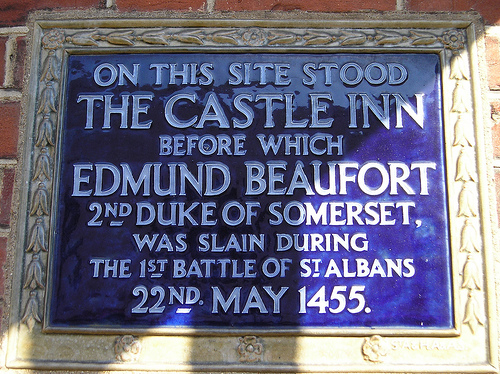
York and Salisbury led the attack on the Lancastrian defences but Lord Thomas Clifford repulsed their efforts. Warwick came through the inn gardens and attacked Clifford from the rear. Lancastrians signalled the call to arms with a tolling of the abbey bell and Somerset joined the melee. He was in a desperate hand-to-hand combat by Castle Inn and became distracted when he saw the inn's sign. He recognised a soothsayer's prophecy to him that said to stay away from castles and his hesitancy allowed the Yorkist soldier to strike home. 
A plaque marking the spot of Somerset's death in modern St. Albans
York was victorious at St Albans and escorted the king back to London. Somerset was buried in St. Albans Abbey but his cause was taken up by his son, Henry Beaufort, 3rd Duke of Somerset, who avenged his father's death five years later at the Battle of Wakefield with the death of the Duke of York.