
Margaret of Anjou was reputably the most powerful woman in 15th Century England by ruling through her passive husband, Henry VI.
GRIEF, JOY, DESPAIR
The year 1453 was a turbulent one for Margaret of Anjou. On 28 February, Margaret's mother died and a pregnant Margaret grieved over the death of the influential Isabella, Duchess of Lorraine, through the first half of the year. This grief turned to joy when Margaret gave birth to Prince Edward of Westminster on 13 October but Henry VI didn't join in the celebrations.
Henry VI's domain over France was reduced to just Calais following the heavy defeat at the Battle of Castillon on 17 July 1453 and the king descended into a mental breakdown. Charles VI of France was known for his bouts of insanity and his grandson, Henry VI, showed signs of schizophrenia as paranoid hallucinations plagued him in late 1453.
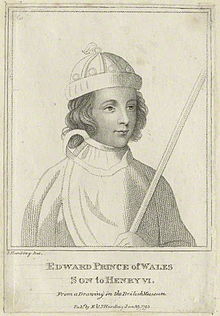 |
| Prince Edward of Westminster |
Margaret tried to protect Henry VI by removing him to Windsor but the queen couldn't keep her husband's malaise secret when Henry VI wouldn't acknowledge his new-born son. The Great Council named Richard Duke of York Protector of the Realm and Edmund Beaufort, 2nd Duke of Somerset, was placed in the Tower of London. The queen and her prince retired to Greenwich Palace until Henry VI regained his senses at Christmas 1454. York relinquished being Protector and Somerset was reinstated as Captain of Calais.
Orders were sent to convene a Great Council meeting for 21 May 1455 in Leicester, away from York's London supporters, and York saw this as an opportunity for the royal forces to arrest him. York, and his commanders, the Neville-father and son, Earl of Salisbury and Earl of Warwick, gathered troops and marched south to meet the royal forces before they reached Leicester.
Margaret stayed with her son in Greenwich and was dismayed to hear of York's swift victory at First Battle of St. Albans that left Somerset dead and her husband captured. York named himself Constable of England and Protector of the Realm once again when Henry VI had a mental relapse under York's watch.
The king recovered in February 1456 and Henry VI now accepted York's influence at court. Margaret was less accommodating to York and convinced Henry VI to move court to her heartland of Coventry. The royal couple went around the country to display their unity and prince but discontent was rumbling in the north between the feuding Neville and Percy families.
Henry VI tried to nullify the discord and peace talks in 1458 culminated on 25 March in the Loveday celebrations when the king proudly led former enemies out of St. Paul's Cathedral in amicable pairs. Behind the king followed Margaret arm-in-arm with the Duke of York and the queen wasn't ready to end her hostilities with York just yet.
ANTAGONISER
The Earl of Warwick had since replaced the deceased Somerset as Captain of Calais and the queen looked to antagonise Warwick by supporting French raids on the English south coast and later unsuccessfully charged Warwick with piracy.
York decided to move on the royal forces and gathered with Warwick and Salisbury a Battle of Ludford Bridge in September 1459. Salisbury had earlier beaten Margaret's forces at Battle of Blore Heath but talk of royal pardons to those who would defect to the king spread throughout York's camp. Warwick's 600 men from Calais, led by Anthony Trollope, changed sides on the eve of battle and the Yorkist commanders fled into exile.
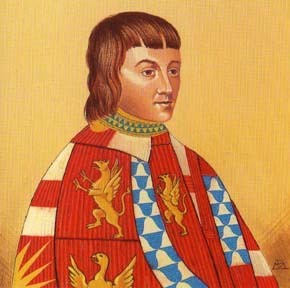 |
| Richard Woodville, Earl Rivers and husband to Jacquetta of Luxembourg |
York took his second eldest son, Edmund, Earl of Rutland, to Ireland whilst Warwick and Salisbury made their way to Calais with York's eldest son, Edward, Earl of March. Warwick still had a ship moored in Sandwich on the English south-east coast and Margaret sent the husband of long-time friend, Jacquetta of Luxembourg, to commandeer the vessel. This expedition would soon backfire when Richard Woodville, Earl Rivers, and his son, Anthony, arrived at Sandwich to take the ship but were taken prisoner. Warwick, Salisbury and March each ridiculed their captives in Calais, with Warwick berating Earl Rivers for being a son of a squire who had married himself into the nobility.
Warwick, Salisbury and March returned to England in June 1460 and met the royal forces at the Battle of Northampton on 10 July 1460. Margaret and Prince Edward stayed within the Northampton city walls whilst Henry VI stayed in his royal tent behind the Lancastrian front line. This front-line was soon breached due to Warwick and March bribing a key Lancastrian general, Lord Grey of Ruthin, and the king's troops quickly fled. Henry VI's tent was guarded by his lieutenants who died protecting the king.
Warwick and March greeted Henry VI and escorted him back to London. The queen and prince quickly fled north-west to Cheshire and later Wales. York arrived in England on 9 September to claim the English throne for himself but was balked by those on the council loyal to the royal couple.
DISINHERITED
York was able to have an Act of Accord passed that disinherited Prince Edward and recognised York, and his subsequent heirs, as successors to Henry VI's throne. Henry VI was still King of England but York was named Protector of the Realm once again.
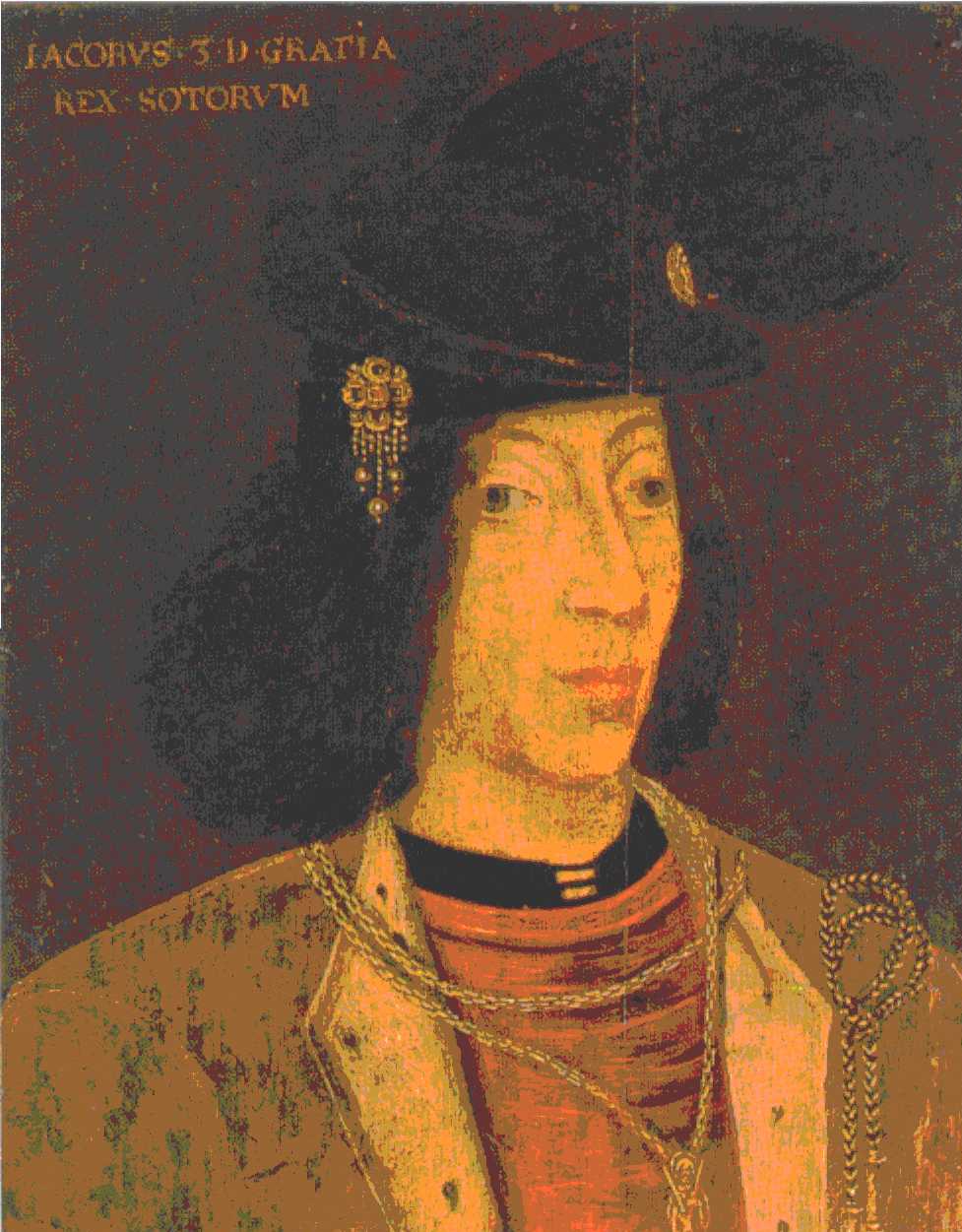 |
| James III of Scotland, potential ally to Margaret of Anjou |
Margaret and her disinherited son journeyed from Wales to Scotland and met with the new Scottish King, James III, to gain support. The border town of Berwick-upon-Tweed was offered up by Margaret in exchange for James III's support. Forces loyal to the royal couple grew south of the Scottish border and York marched north from London on 9 December 1460 to meet them. The two forces clashed at the Battle of Wakefield on 30 December 1460 which saw the deaths of York, Rutland and Salisbury.
Margaret was overjoyed to hear the death of her fiercest adversary and how his claim to the throne was ridiculed with a paper crown adorning York's decapitated head on a spike overlooking the city of York.


